

Have you ever followed an eyeliner tutorial to the letter, only to find that the finished look appears nothing like it did in the video?
Your technique may not be the problem. The tutorial could be.
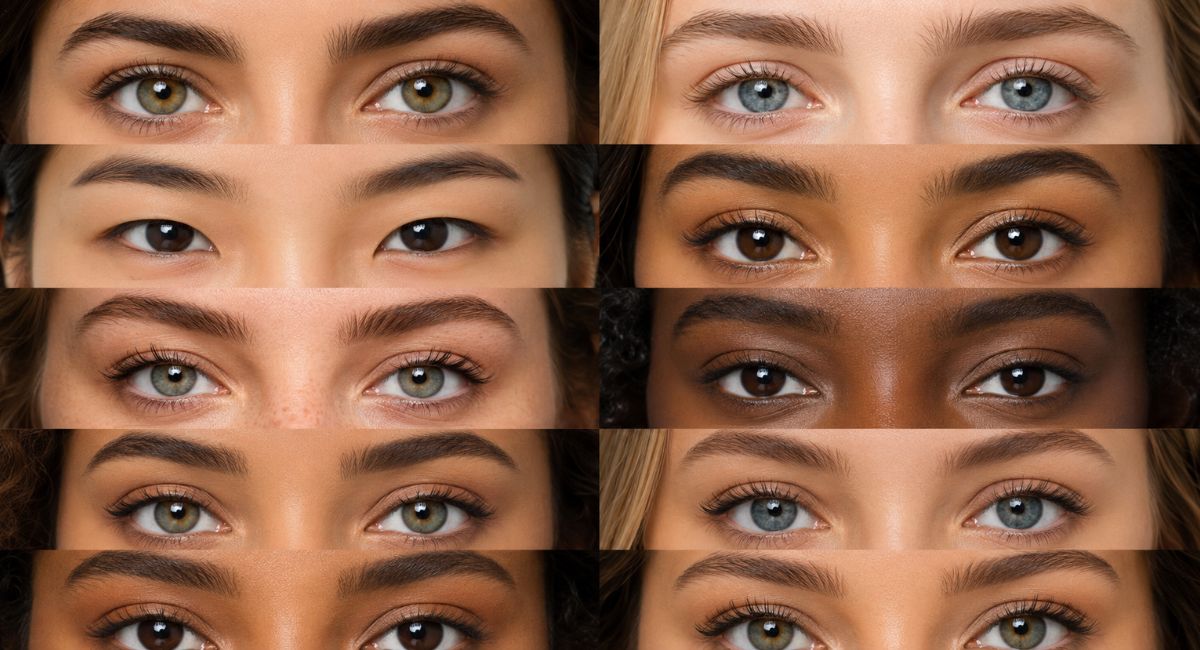
Many beauty tutorials assume that every pair of eyes has the same crease, lid space, corner angle, and depth. In reality, eye shapes can be very different.
A smoky eye that opens up one person’s gaze may make another person’s eyes appear smaller. A dramatic wing may lift one eye shape but disappear into the crease of another.
A better place to start is understanding your natural eye shape. This can help you feel more confident when choosing:
- Eyeliner placement
- False eyelashes
- Eyeshadow techniques
- Glasses
- Eyebrow styling
However, eye shape is not a strict beauty label or medical diagnosis. Most people have a combination of characteristics.
For example, you may have hooded, slightly upturned almond eyes or round eyes that are also deep-set.
This guide explains the most common eye shapes, how to identify yours, and how to work with your natural features rather than forcing them to fit a trend.
What Is Eye Shape?
The term eye shape generally refers to the visible opening between the upper and lower eyelids. In anatomical terms, this opening is known as the palpebral fissure.
Several features influence how your eye shape appears:
- The position of the inner and outer corners
- The curve of the upper and lower eyelids
- The height and visibility of the eyelid crease
- The amount of visible mobile lid space
- The depth of the eyes within the eye sockets
- The space between the eyes
- The position of the eyebrows
- The distribution of skin, muscle, and fat around the eyes
Eyelids are not simply decorative facial features. They protect the eyes, spread the tear film, and help keep the eye’s surface healthy.
The upper and lower eyelids contain several layers, including:
- Skin
- Muscle
- Connective tissue
- Glands
- Conjunctiva
This is why two people with similar iris colours can have noticeably different eye shapes. The surrounding eyelid structure determines how much of the eye is visible and how makeup, light, and shadow behave around it.
Eye Shape Is More Complex Than One Label
One of the biggest misconceptions is that everyone belongs to only one eye-shape category.
A more accurate way to understand your eyes is to consider several dimensions separately:
- Outline: Almond or round
- Corner direction: Upturned, straight, or downturned
- Crease structure: Visible crease, hooded crease, or monolid
- Depth: Prominent, average, or deep-set
- Spacing: Close-set, balanced, or wide-set
This framework helps explain why online eye-shape quizzes sometimes produce conflicting answers. Different quizzes may be measuring different characteristics.
10 Most Common Eye Shapes
1. Almond Eyes
Almond eyes are usually longer horizontally than they are vertically. The inner and outer corners taper slightly, creating a shape similar to an almond.
In many almond-shaped eyes, the iris touches or nearly touches both the upper and lower eyelids. When looking straight ahead, very little white may be visible above or below the iris.
Common characteristics include:
- Tapered inner and outer corners
- Balanced horizontal proportions
- A gently curved upper eyelid
- Less visible white beneath the iris
Almond eyes are often considered versatile for makeup because they can support both rounded and elongated styles.
Best makeup approach: Follow the natural eye shape with eyeliner and extend the line slightly beyond the outer corner. Apply the darkest eyeshadow to the outer third of the eyelid and blend upward rather than straight outward.
Watch out for: Very heavy black eyeliner around the entire eye, which may make the visible eye area appear smaller.
2. Round Eyes
Round eyes usually appear more open vertically. When looking straight into a mirror, you may see some white above or below the iris.
They often create a bright, expressive appearance.
Typical characteristics include:
- A noticeably curved upper and lower eyelid
- Greater vertical openness
- A wider-looking centre
- Visible white around part of the iris
Best makeup approach: Apply darker colours toward the outer corners to create horizontal length. A soft wing or elongated eyeshadow shape can add definition without hiding the eye’s natural openness.
Watch out for: Applying dark shadow evenly around the entire eye when your goal is to create a longer appearance.
There is nothing wrong with emphasising roundness. A halo eye, central shimmer, or doll-like lash placement can make round eyes look even more striking.
3. Hooded Eyes
Hooded eyes have a fold of skin that covers part of the eyelid crease. When the eyes are open, some or most of the mobile eyelid may be hidden.
Hooding may be:
- Genetic
- Age-related
- A combination of both
Over time, skin may lose elasticity, eyebrow position may change, and the tissues around the eyelid may shift, making hooding more noticeable.
Common characteristics include:
- A partly concealed crease
- Limited visible mobile lid space
- Makeup transferring above the crease
- Eyeliner disappearing when the eyes are open
Best makeup approach: Apply makeup while looking straight into the mirror. Position transition shadow slightly above the natural crease so that it remains visible when your eyes are open.
Keep eyeliner thin along the inner and middle sections of the lash line, adding width only toward the outer corner.
A short, upward wing often works better than a long, horizontal wing.
Watch out for: Drawing eyeliner with your eye closed without checking how it looks when open. The hooded fold may distort or hide the line.
4. Monolid Eyes
Monolid eyes have little or no visible upper eyelid crease. Instead of folding inward at a clearly defined crease, the upper eyelid creates a smoother surface from the lash line toward the brow.
Single-fold and double-fold eyelid structures are natural anatomical variations and are not exclusive to one race or ethnicity.
Common characteristics include:
- Little or no visible crease
- A smooth upper eyelid
- Makeup appearing most clearly near the lash line
- Straight or gently curved upper-lid contours
Best makeup approach: Create dimension through gradual colour placement rather than trying to imitate a deep crease.
Apply:
- The darkest shade near the lashes
- A medium shade above it
- A lighter shade closer to the brow
Graphic eyeliner, gradient eyeshadow, and coloured mascara can work particularly well on monolids.
Watch out for: Copying cut-crease techniques designed for deep, highly visible folds without adjusting the placement.
5. Upturned Eyes
Upturned eyes have outer corners that sit slightly higher than the inner corners. This creates a naturally lifted effect.
The angle may be subtle. You do not need a dramatically raised outer corner to have upturned eyes.
Typical characteristics include:
- Outer corners positioned higher than the inner corners
- A naturally lifted appearance
- An upward angle along the lower lash line
Best makeup approach: Follow the eye’s natural upward direction with eyeliner or eyeshadow. Keep your eyeliner wing aligned with the lower lash line rather than drawing it too steeply.
For a softer effect, apply mascara evenly across the lashes instead of concentrating all the volume at the outer corners.
Watch out for: Extending the outer wing too far, which may make the eyes look narrower than intended.
6. Downturned Eyes
Downturned eyes have outer corners that sit slightly lower than the inner corners. They can create a soft, thoughtful, or relaxed expression.
This eye shape is sometimes treated as something that needs to be corrected, but that is an outdated approach.
Makeup can either lift the outer corner or intentionally highlight its natural softness.
For a lifted appearance:
- Stop dark eyeliner just before the eye’s lowest outer point
- Angle the wing gently upward
- Curl the outer lashes
- Direct mascara toward the temples
For a softer appearance:
- Apply diffused shadow along the natural lower outer corner
- Use lightly separated lashes
- Choose soft brown or grey liner instead of intense black
Watch out for: Dragging dark eyeliner downward past the natural corner unless that is the effect you want.
7. Deep-Set Eyes
Deep-set eyes sit farther back within the eye socket. The brow bone may appear more prominent, and natural shadows may form around the crease.
Common characteristics include:
- A pronounced brow bone
- A naturally defined crease
- Shadow around the upper eye area
- Eyes that appear recessed compared with the brow
Best makeup approach: Use lighter or reflective colours on the mobile eyelid to bring it visually forward. Apply medium tones slightly above the deepest part of the crease.
Watch out for: Applying very dark shadow across the entire eyelid, which may make the eyes appear more recessed.
Deep-set eyes may also benefit from careful under-eye concealer placement because natural bone structure can create shadows even when the person is well rested.
8. Prominent or Protruding Eyes
Prominent eyes sit farther forward within the eye socket. The mobile eyelid is often highly visible, creating plenty of room for detailed or colourful makeup.
The word prominent is a cosmetic description. However, a sudden change in how far one or both eyes project may be a medical concern rather than a natural eye-shape feature.
Seek professional advice when bulging is accompanied by:
- Pain
- Redness
- Vision changes
- Difficulty closing the eyelids
- Sudden changes in appearance
Best makeup approach: Matte and medium-depth shades can add definition. Tightlining the upper lash line can ground the eyes without covering the visible eyelid.
Watch out for: Very pale shimmer across the entire eyelid if you do not want to emphasise projection.
9. Close-Set Eyes
Close-set eyes have a smaller distance between them relative to the width of one eye.
A common beauty guideline is to compare the space between your eyes with the width of one eye. This is only a visual estimate, not a medical measurement.
Best makeup approach:
- Keep the inner corners bright
- Concentrate darker colours toward the outer third
- Place eyeliner and lash volume toward the outer corners
- Keep the brow starting points natural
Watch out for: Heavy inner-corner eyeliner or dark eyeshadow close to the bridge of the nose.
10. Wide-Set Eyes
Wide-set eyes have a larger space between them relative to the width of one eye.
Best makeup approach: Carry slightly more definition toward the inner lash line. Softly shading the inner crease may help create visual balance.
Applying mascara evenly across the lashes may work better than using a strongly flared outer-corner lash.
Watch out for: Combining excessive inner-corner highlighting with dramatic outer wings, which may create even more visual distance.
How to Determine Your Eye Shape at Home
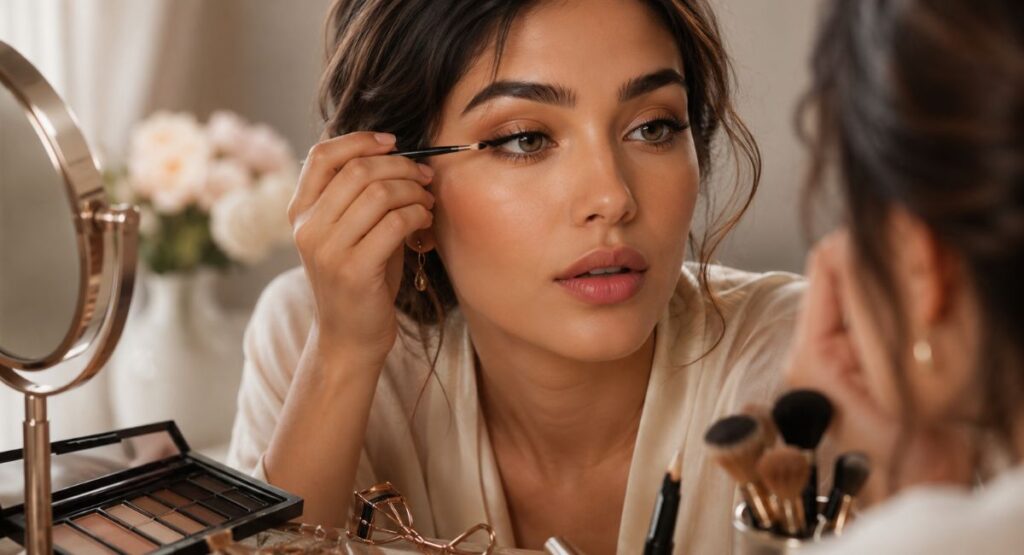
You do not need an app or professional analysis. Use a mirror, neutral lighting, and a relaxed facial expression.
Step 1: Look Straight Ahead
Keep your head level and avoid raising your eyebrows.
Lifting the brows temporarily reveals more eyelid space and may make hooded eyes appear less hooded.
Step 2: Examine the Overall Outline
Ask whether your eyes appear longer than they are tall.
- Longer and tapered: Usually almond
- More vertically open: Usually round
Step 3: Check Your Crease
Look at the area between the upper lashes and the eyebrow.
- Clearly visible crease: Double-lid structure
- Crease partly covered: Hooded eyes
- Little or no visible crease: Monolid
Step 4: Compare the Corners
Imagine a horizontal line passing through the inner corner of the eye.
- Outer corner above the line: Upturned
- Outer corner below the line: Downturned
- Outer corner near the line: Relatively straight
Step 5: Evaluate Eye Depth
Look at your face from a slight side angle.
- Prominent brow bone with recessed eyes: Deep-set
- Eyes sitting farther forward: Prominent
- Neither feature clearly visible: Average depth
Step 6: Check the Spacing
Compare the distance between your eyes with the width of one eye.
- Less than one eye width: Close-set
- Approximately one eye width: Balanced
- More than one eye width: Wide-set
Do not become overly focused on exact measurements. Facial proportions are three-dimensional, while photographs flatten the face.
Camera angle, focal length, distance, and lighting can all affect how your eye shape appears.
The Best Makeup Tips for Every Eye Shape
The most effective strategy is not memorising dozens of strict rules. Instead, decide what effect you want your makeup to create.
To Make the Eyes Look Longer
- Extend eyeshadow toward the outer corner
- Use a small horizontal or lifted wing
- Concentrate mascara on the outer lashes
- Avoid overly rounded shadow placement
To Make the Eyes Look More Open
- Curl the lashes
- Keep the centre of the eyelid bright
- Apply a nude or pale pencil to the lower waterline
- Avoid extremely thick upper eyeliner
- Place shimmer near the centre or inner third
To Create a Lifted Effect
- Blend eyeshadow upward toward the temple
- Keep the outer lower lash line clean or softly defined
- Angle eyeliner above the natural outer corner
- Use shorter inner lashes and longer outer lashes
To Add Dimension
- Apply medium eyeshadow through or above the crease
- Keep the darkest colour close to the lash line
- Blend the edges carefully
- Use a subtle brow-bone highlight
To Create a Softer Look
- Try brown, grey, plum, or muted navy instead of intense black
- Choose diffused pencils instead of sharp liquid eyeliner
- Apply mascara in thin, separated coats
- Avoid strong lines around the entire eye
Eye-Shape Makeup Trends for 2026
In 2026, eye makeup is moving away from trying to “correct” natural features and toward adaptable self-expression.
Popular directions include:
- Diffused blue eyeshadow
- Coloured mascara
- Burgundy and green eyeliner
- Soft-grunge makeup
- Graphic eyeliner
- Tightlined eyes
- Reflective or metallic eyelids
The important change is that these trends can be adapted for different eye shapes.
For example:
- Hooded eyes: Place graphic liner above the fold so it remains visible.
- Monolids: Blend metallic shadow vertically to create a smooth gradient.
- Round eyes: Extend blue shadow outward to create length.
- Almond eyes: Follow the natural taper with burgundy eyeliner.
- Deep-set eyes: Apply reflective shadow to the mobile lid rather than deep inside the crease.
Digital shopping, social platforms, and personalised product discovery are also shaping the beauty industry.
Eye-shape advice will increasingly be delivered through:
- Short videos
- Virtual filters
- Makeup applications
- Product recommendations
- Personalised digital tutorials
This availability can be useful, but it may also encourage oversimplified or inaccurate eye-shape labels.
Common Eye-Shape Mistakes and How to Correct Them
Mistake 1: Forcing Yourself Into One Category
You may have several eye characteristics at the same time.
Solution: Describe your eyes with a combination of terms, such as:
- Hooded almond eyes
- Round, slightly downturned eyes
- Deep-set upturned eyes
Mistake 2: Copying Product Placement Exactly
The placement shown in a tutorial may suit the creator’s crease, spacing, and brow position rather than yours.
Solution: Copy the purpose of the technique, not its exact location.
Mistake 3: Examining Your Eyes With Raised Eyebrows
Raising your eyebrows changes the appearance of the crease and visible lid space.
Solution: Relax your forehead and look straight ahead.
Mistake 4: Using a Distorted Selfie
Close-up photographs taken with a front-facing camera can distort facial proportions.
Solution: Use a mirror or take a photograph from a comfortable distance with the camera positioned at eye level.
Mistake 5: Treating Natural Asymmetry as a Flaw
Most faces are not perfectly symmetrical. One eye may be slightly more hooded, open, or lifted than the other.
Solution: Apply makeup according to the visible result.
Your eyeliner lines do not need to be mathematically identical to look balanced.
Mistake 6: Confusing a New Eyelid Change With Eye Shape
A suddenly drooping eyelid is not simply a new beauty characteristic.
Ptosis refers to an abnormally low upper eyelid. New symptoms should be evaluated by a medical professional, especially when accompanied by:
- Double vision
- Pain
- Facial weakness
- Sudden vision changes
- Difficulty opening the eye
Pros and Cons of Eye-Shape Categories
Advantages
Eye-shape categories can:
- Make makeup tutorials easier to understand
- Explain why techniques behave differently on different people
- Improve eyeliner and false-lash application
- Help beginners understand facial proportions
- Support more personalised beauty advice
Limitations
Eye-shape categories may also:
- Oversimplify complex anatomy
- Promote unrealistic symmetry standards
- Encourage unnecessary “correction”
- Ignore changes caused by age or facial expression
- Reinforce narrow beauty ideals
- Produce inaccurate results through automated apps
Eye-shape labels are most useful as practical tools, not as rules about attractiveness.
How Eye Shape Can Appear to Change With Age
Your basic bone structure does not suddenly change, but the tissues around your eyes gradually evolve with age.
Common changes may include:
- Reduced skin elasticity
- A lower eyebrow position
- Increased upper-eyelid hooding
- Changes in eyelid volume
- A more visible or higher-looking crease
- Under-eye hollowing
- More visible eyelid bags
Skin, muscle, fat, ligaments, and bone can all contribute to changes around the eyes.
The pattern and timing also differ between individuals.
This is why the eyeliner technique that worked for you at 22 may need adjusting at 42.
It does not mean that your eyes have become less attractive. The visible canvas has simply changed.
The Future of Eye-Shape Analysis
More Personalised Tutorials
Beauty education is moving away from one-size-fits-all instructions.
Future tutorials may adjust product placement according to:
- Crease depth
- Eye angle
- Spacing
- Eyelid movement
- Brow position
- Facial expressions
Enhanced Virtual Makeup Try-On
Virtual makeup systems are becoming more advanced.
Future systems may offer:
- More realistic product placement
- Better colour control
- Improved facial-identity preservation
- Real-time makeup transfer
- Better consistency across different poses
However, virtual systems are not automatically objective.
Results may be influenced by:
- Lighting
- Camera angles
- Skin-tone representation
- Image quality
- Training datasets
More Accessible Beauty Technology
Emerging beauty technology may provide more useful guidance for people with visual impairments.
Potential features may include:
- Hands-free instructions
- Step-by-step audio guidance
- Real-time placement feedback
- Context-aware makeup assistance
- Voice-controlled tutorials
Less Focus on “Fixing” Features
The most important long-term change may be cultural rather than technological.
Instead of asking:
“How do I fix my eye shape?”
More people are beginning to ask:
“How can I create the effect I want while still keeping my natural features visible?”
That is a healthier and more creative question.
Conclusion
Understanding your eye shape can make beauty techniques easier to apply, but no label should dictate what you are allowed to wear.
The best approach is to examine several characteristics:
- Overall outline
- Corner angle
- Eyelid crease
- Depth
- Spacing
Once you understand these dimensions, you can apply makeup intentionally rather than following rules designed for someone else’s face.
Your eye shape does not decide which colours, lashes, or eyeliner styles you can wear.
It simply helps you predict where products will be most visible and how they may change the overall appearance of your eyes.
Quick Summary: Key Takeaways
- Eye shape is influenced mainly by the eyelids, crease, corners, depth, and spacing.
- Most people have a combination of two or more eye-shape characteristics.
- Common types include almond, round, hooded, monolid, upturned, downturned, deep-set, prominent, close-set, and wide-set eyes.
- Look straight ahead with relaxed eyebrows when identifying your eye shape.
- Adapt makeup placement to your visible lid space instead of copying tutorials exactly.
- Eye shape may appear to change with age because of changes in skin, fat, muscle, and eyebrow position.
- Sudden drooping, bulging, pain, double vision, or facial weakness requires medical attention.
- Eye makeup is becoming more colourful, personalised, and expressive in 2026.
- Eye-shape categories should inspire creativity, not define beauty.