

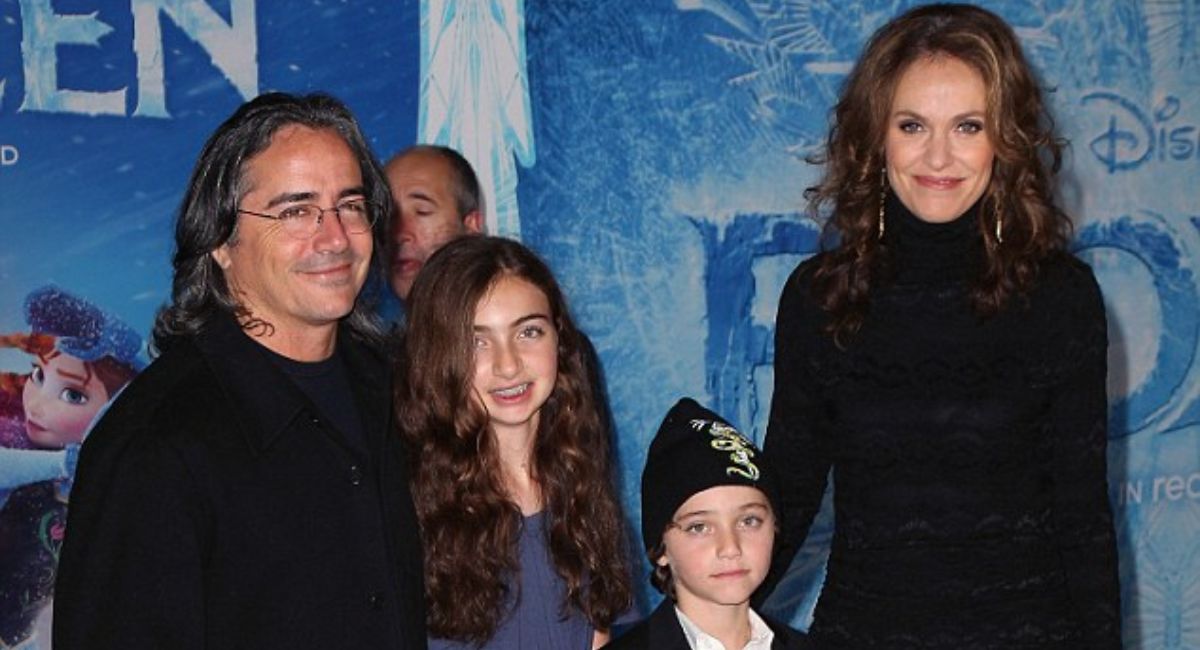
Introduction: Why Do People Search for Bodhi Russell Silberling?
Born near Hollywood, but taking a quieter path to technology, finance, and ideas, not red carpets—what does that mean?
And that is the interesting question behind Bodhi Russell Silberling. His name alone draws attention because of his famous parents: actress Amy Brenneman, best known for Judging Amy, Private Practice, and The Leftovers; and director-writer-producer Brad Silberling, known for movies like Casper, City of Angels, and Lemony Snicket’s A Series of Unfortunate Events. According to public records and entertainment coverage, their son is Bodhi Russell Silberling, born June 8, 2005.
But Bodhi’s story is more than just another “celebrity child” profile. In fact, one of the most important things to realize is that he seems to keep a fairly low profile in the public eye. Bodhi Russell Silberling is not like many children of actors and filmmakers who have made their identities in entertainment headlines. Openly available information rather points to education, technology, artificial intelligence, data, and finance.
That makes his story useful for a broader conversation: how the next generation attached to creative families can build careers in different fields.
Background: Who Is Bodhi Russell Silberling?
Bodhi Russell Silberling is the child of actress Amy Brenneman and director Brad Silberling. According to People magazine, Brenneman and Silberling were already known to be the parents of two children, Charlotte Tucker and Bodhi Russell.
As of July 2026, Bodhi is 21 years old, according to his publicly reported birthday of June 8, 2005. I grew up in a family with a long history of storytelling, film, television, and the public face of the creative business.
His mother is actress, producer, and creator Amy Brenneman. She gained fame from NYPD Blue and then co-created and starred in Judging Amy, a drama based on her mother’s work as a judge. Brenneman graduated from Harvard Divinity School in 2026 and celebrated with her husband, Brad Silberling, and their children, Charlotte and Bodhi, People reported.
His father, Brad Silberling, is a director, writer, and producer with a feature film and television career. He is a director, writer, and producer whose work has spanned film and TV, says UCLA’s School of Theatre, Film, and Television.
This family background is important but should not be used to fully define Bodhi. Here’s the more precise angle: Bodhi Russell Silberling is a modern-day second-generation public figure who seems to be carving out an identity outside of traditional celebrity culture.
Bodhi Russell Silberling: Hollywood Legacy to Technology Transition
There are many who expect celebrity kids to follow in their parents’ footsteps. People think the kid might act if the parents are actors. If parents are directors, it’s a given the child will go into film. But today’s career paths are no longer predictable.
According to public records, Bodhi Silberling is affiliated with the University of California, Berkeley. American Banker reports he is a student at UC Berkeley, and a public professional profile says he is “focused on economics and data science”.
It matters that blend. The most powerful career intersections in 2026 are data science, economics, artificial intelligence, and finance. They are at the core of banking, fintech, risk modeling, investment analysis, automation, business decisions, etc.
This is where Bodhi’s public footprint gets more interesting. He is not primarily known for his acting roles or entertainment projects. Instead, he has been part of the public discussion around AI in banking.
In January 2025, American Banker ran an opinion piece by Bodhi Silberling titled “Think AI will replace human bankers? “Don’t count on it.” The main takeaway from the article was that banking is all about human relationships, trust, perception, and judgment, and that human bankers still have a role to play as artificial intelligence changes the industry.
That is a wise position for a young person entering a field often dominated by wild predictions. Some say that AI will replace everyone. “AI is mostly hype,” some say. Bodhi’s public argument falls in the middle. AI matters, but so does human judgement.
Why His AI & Banking Angle Matters
The finance industry is one of the largest testing grounds for artificial intelligence. Banks use AI for fraud detection, customer support, document review, risk analysis, credit modeling, compliance, and personalisation. At the same time, finance is founded on trust. You can use an app as a customer, but when you’re about to make a serious financial decision, many people still want a human expert.
Hence, the topic of Bodhi Russell Silberling’s public article is timely. This is part of a much larger debate in 2026: Will AI replace professionals or will it make skilled professionals more valuable?
The strongest answer is probably both. AI can reduce the need for repetitive work and increase the value of people who understand context, ethics, communication, and judgment. McKinsey estimates that generative AI could deliver $200 billion to $340 billion in annual value to the global banking industry, mainly driven by productivity improvements.
But regulators and financial institutions also are warning about risk. The Bank for International Settlements has warned AI in finance could exacerbate financial vulnerabilities if not adequately controlled and overseen.
That makes Bodhi’s public stance especially relevant. The future of banking isn’t a simple “AI versus humans” situation. It’s more likely to be AI plus humans, with the best results from people who know how to use technology responsibly.”
A contemporary profile: privacy, public curiosity, and ethical biography
One must be careful writing about Bodhi Russell Silberling. His parents are famous, but he is not your average star with a huge entertainment career. That means responsible content should not pretend that there is public information when there is none.
This is a common mistake in celebrity family SEO content. Many sites inflate facts, invent career details, or blow up minor press mentions into full-blown biographies. This leads to weak, unreliable content.
A better way is to separate the facts from the interpretation.
What is paid for publicly?
Public sources say Bodhi Russell Silberling is the son of Amy Brenneman and Brad Silberling and has a sister named Charlotte Tucker. They also confirm that Bodhi Silberling is a student at UC Berkeley who has written publicly about AI and banking.
What should not be taken for granted?
Writers should not speculate about private information about his private life, relationships, income, political views, or future career. If Bodhi himself does not provide those details in reliable sources, they should not be in the article.
This is not just an ethical issue. It is a matter of SEO quality too. Search engines are increasingly rewarding helpful, trustworthy content and penalizing thin pages that repeat unverified claims.
Key Takeaways From Bodhi Russell Silberling’s Public Path
1. A family background can spark curiosity, but it doesn’t define who you are
Bodhi’s parents are successful creatives. Amy Brenneman’s career has encompassed themes of acting, producing, writing, and public service. Brad Silberling has worked in fantasy, comedy, television directing, and emotional storytelling.
But Bodhi’s public orientation seems to be otherwise. He clearly has an interest in data, finance, and AI. It shows a person can be from a creative family and still create a separate professional identity.
2. Next generation: blending creativity with analytics
The old career map was easy: artists went into art, business students went into business, engineers went into engineering. Today the most interesting careers are often a mix of these worlds.
“A student who knows how to tell a story and use data can sell technology better.” A finance person who gets human behavior can leverage AI better. A good communicator technologist can build products people can trust.
This new model is what Bodhi’s public writing on AI and banking is. This isn’t just technical. And it’s about relationships and trust and human judgment.
3. Even public figures who lay low can shape conversations
Not all of the important public voices need to have millions of followers. Sometimes a single article in a reputable industry publication reveals where someone’s thinking is headed.
The importance of Bodhi’s American Banker article is that it puts him in a serious conversation about AI, work, and finance. It also suggests he’s thinking past the hype of surface-level tech.
Practical advice for readers following Bodhi Russell Silberling’s journey
And if you’re exploring Bodhi Russell Silberling because you enjoy technology, finance, or carving your own way outside family expectations, there are lessons you can apply here.
Develop skills at the intersection
Don’t just learn one thing. The best modern careers are often those in between fields. Some useful combinations are the following:
- Data Science + Finance
- AI + ethics
- Banking + consumer psychology
- Economics x ML
- technology + communications
- Data creativity + storytelling
Create a public point of view
Bodhi’s public article demonstrates the value of having a clear opinion. You don’t have to be famous to publish thoughtful work. Writing on questions in the industry can establish credibility for students and early-career professionals.
For example, instead of writing, “AI is the future,” a better topic would be: “Why AI will automate banking tasks but not replace trust-based financial relationships.”
Ensure visibility without compromising privacy
Visibility is not oversharing. Bodhi’s public footprint seems to be on education and professional interests, not personal drama. That’s a good model for the young professional.
You can establish credibility through:
- Articles.
- Research projects:
- Case studies
- LinkedIn posts.
- Work in Portfolio
- Open source projects
- Internships or Industry Perspectives
The idea is to be found for your ideas, not exposed for your private life.
Common Errors and Issues
Mistake #1: Seeing him only as a celebrity kid
The easiest SEO angle is to write, “Who is Amy Brenneman’s son? But that is also its weakest point. Bodhi is made for his parents.
Solution: Focus on his own public interests, in particular education, AI, finance, and responsible tech.
Error 2: Making up personal details
Some biographical sites speculate to fill in the blanks. That may get you clicks, but it wears down trust.
Solution: Use hedging like “publicly available information suggests” or “he has been identified as.” Do not state private claims as fact.
Error 3: Missing the larger trend
Bodhi’s story is meaningful in context. The bigger trend is the migration of young professionals into AI-driven finance and data-driven decision making.
Tie the profile to larger issues: AI in banking, human judgment, ethical automation, career reinvention.
Fair Analysis and Pros and Cons
Pros of Bodhi Russell Silberling’s public career
Its chief merit is its independence. More connected to education and data and finance than entertainment, Bodhi can develop a reputation separate from his Hollywood family identity.
Relevance is another strength. AI and finance are high-impact fields. As banks and financial institutions automate more, people who understand technology and human trust will be in demand.”
Privacy is third. A reduced public profile can help guard personal space while being professionally credible.
Cons or difficulties
The biggest challenge is the comparison of the public. There are assumptions that come with being related to well-known parents. His family might be searching for him, not his ideas.
Another problem is the lack of public information. For writers, this means there is not enough verified material for a traditional long biography. For Bodhi it could mean his public narrative is still being written.
Finally, AI and finance are competitive spaces.” There’s more to it than just being interested in them. To be credible over time you need to have strong technical skills, ethical awareness and real world experience.
Future Trends: What Bodhi Russell Silberling’s Story Means in 2026 and Beyond
Bodhi Russell Silberling’s public direction reflects a few future trends.
Trend 1: Celebrity offspring choosing non-celebrity careers
Back in the day, fame was usually confined to entertainment. Today many of the family’s descendants work in business, activism, tech, research, or entrepreneurship. It produces a different kind of public identity: not fame first, but expertise first.
Trend 2: AI becoming a normal part of finance careers
The future banker, analyst, consultant, or fintech founder won’t simply “use AI.” They’ll need to understand how AI impacts trust, risk, customer experience, regulation and decision-making.
And this is why Bodhi’s public argument about human bankers is still relevant. AI can transform banking workflows, but financial relationships still demand trust, empathy, accountability, and judgment.
Trend 3: Human judgment becoming more important, not less
Basic automation will no longer be impressive as AI tools become ubiquitous. What will matter is knowing when to trust the machine, when to challenge it, and how to interpret its output for real people.
This is especially important in sectors like banking. A model can crunch the numbers, but people still have to understand fear, ambition, risk tolerance, family pressure, business context, and long-term consequences.
Trend 4: Young pros building credibility with ideas
Bodhi’s public article illustrates how early-career voices can enter into major conversations. Writing intelligent analysis, participating in research communities, and engaging in debates are all ways for students and young professionals to establish themselves as thought leaders before they become senior executives.
The Bottom Line: What We Learned About Bodhi Russell Silberling
It’s not interesting that Bodhi Russell Silberling is in the spotlight all the time, but rather that he isn’t. He’s a quieter breed of modern public figure: a person with a known family name who seems to be forging a path through education, tech, finance, and thoughtful commentary.
His story also has a good lesson for the reader. In a fame-obsessed world, long-term value is often in skills, ideas, and judgment.
Key Points:
- Bodhi Russell Silberling is best known as the son of Amy Brenneman and Brad Silberling.
- He was born on June 8, 2005, which means he will be 21 by July 2026.
- Public sources say he is affiliated with UC Berkeley and list his interests as AI, finance, economics, and data.
- In his article for American Banker, he argued that AI will not completely replace human bankers because trust and judgment are at the core of banking.
- The best way to describe his public trajectory is a move away from Hollywood family recognition to technology and finance.
- Responsible content about him should not include private speculation, only verified public information.
- The big lesson is that the future belongs to those who can mix technical expertise, human insight, and ethical judgment.
Quick Summary Chart
Bodhi Russell Silberling is the son of actress Amy Brenneman and director Brad Silberling. His familial connections are to Hollywood, but his public image suggests UC Berkeley, AI, data, finance, banking. His most notable public professional mark is his American Banker opinion piece on why artificial intelligence will support, not fully replace, human bankers. His is part of a wider trend: By 2026, young professionals are defining their identities through expertise, not celebrity exposure.