

Avant Garde Fashion When Clothes Become Art, Identity and Innovation
What if your clothes were not just what you wear? What if they’re something you use to challenge ideas, express emotions, and redefine what beauty means?
This is the key question in avant garde fashion, where designers use clothes as creative experiments rather than simple products. Avant garde fashion is not about following trends; it is about asking a more powerful question:
What would fashion be without rules?
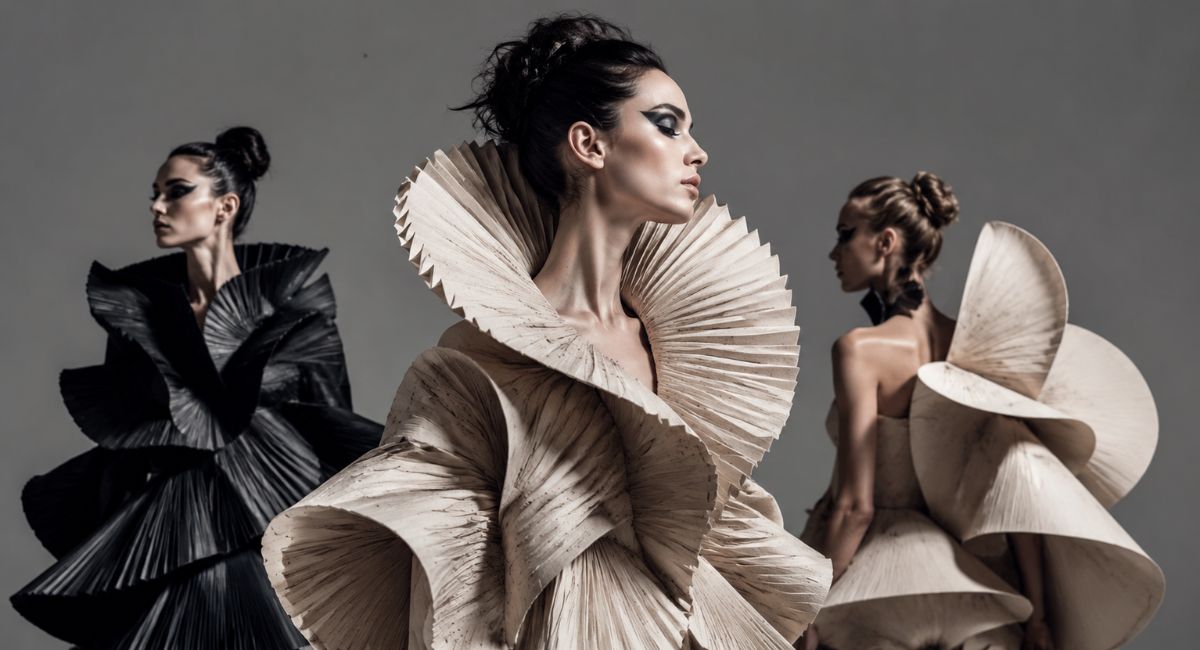
“Avant garde fashion is where art, design, architecture, and personal identity meet, whether expressed through sculptural silhouettes, unconventional materials, technology-driven designs, or cultural commentary.
Mainstream fashion is often about wearability and commercial appeal, while avant garde fashion is about imagination. It produces clothes that can feel futuristic, weird, or even impossible but often drives the trends that find their way into our everyday wardrobes.
By 2026, avant garde design is no longer a niche artistic movement, with fashion increasingly linked to sustainability, digital technology, individuality, and cultural expression. It is very much a blueprint for the future of fashion itself.
Quick Summary: What Is Avant-Garde Fashion?
Avant garde fashion is an experimental approach to designing clothes that pushes boundaries by:
- Unusual shapes and forms
- New materials
- Artistic ideas
- Genderfluid expressions
- Integration of technology
- Cultural critique
- Redesigning traditional beauty standards
Avant garde does not ask, “What will sell?”, unlike conventional fashion.
It says:
“What can fashion tell us in different ways?”
The Roots of Avant Garde Fashion: Rebellion Became Design
The phrase avant garde is borrowed from French military usage to mean “advance guard” or those who go ahead of the main group.
The term was associated with artists, writers, architects and designers who refused to accept traditional standards and experimented with new forms.
Avant garde fashion evolved alongside art movements such as:
- In the future
- Surrealist
- Dadaism Modern art, postmodernism
These movements went against the traditional way of thinking, and fashion designers took on the same philosophies.
The early years: Fashion as a means of protest
In the past, clothes have often reflected social change. The designers started to ask:
- Why should clothing stick to traditional gender rules?
- Why does beauty have to be a certain way?
- “Why should clothes only be functional?
The result was fashion that made a statement, rather than simply an outfit.
Designers began to use clothing to explore themes such as:
- Identity Politics Technology
- Transformation of humanity
- Environmental issues
Avant-Garde Fashion Designers Who Made Their Mark
There would be no such thing as modern avant garde fashion without visionary designers who turned clothes into conceptual art.
Rei Kawakubo: Redefining Beauty
Rei Kawakubo, founder of Comme des Garçons, is one of the most influential figures in avant garde fashion.
Her designs often challenge traditional concepts of:
- Symmetry Ratio
- Body contouring
- Conventional beauty
Her famous “body distortion” ideas resulted in clothes that questioned whether fashion’s role was to make people look traditionally beautiful or to make them think differently.
Kawakubo showed that clothing could work like sculpture.
Alexander McQueen: Fashion as Theatre
Alexander McQueen made fashion shows an emotional experience.
His work mixed:
- References in history
- Dark romanticism, artisticism, storytelling
- Theatrical performance
McQueen proved that a runway show could be more of a theatrical production than simply a display of clothing.
His legacy endures in the work of designers who see fashion as narrative art.
Iris van Herpen: When Science Meets Fashion
Iris van Herpen is a newer generation of avant-garde designers that combines fashion with technology.
Her work investigates:
- 3-D Printing
- Digital making: biomimicry
- Nature-inspired movement
- Advanced materials
Her designs are an example of how future fashion may combine with science, engineering and digital innovation.
The Fundamental Features of Avant Garde Fashion
Avant-garde fashion isn’t just “wearing weird clothes”. It has creative principles.
1. Experimental Silhouettes
Traditional fashion is often about accommodating the human form.
Avant garde fashion is often questioning the body itself.
Examples are:
- Massive structures
- Asymmetrical shapes
- Inflated forms
- architectural designs with layers
- Unexpected size
A garment can make someone look bigger or smaller, abstract or transformed.
Clothing becomes a visual dialogue between the human body and space.
2. Non-traditional Materials
Avant garde designers often experiment with materials other than textiles.
Examples:
- Recycled plastic
- Metal parts
- Sheer fabrics
- Industrial materials
- Digital Fabrics—
- Substitutes based on plants
The material itself becomes part of the artistic message.
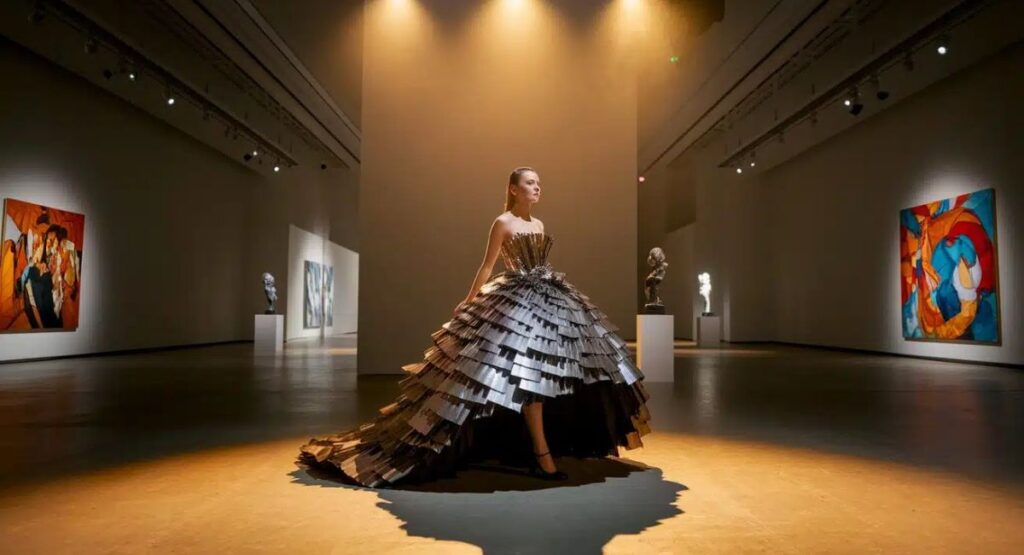
For example, a designer may choose to work with waste materials not because they are cheap but because they represent ideas around consumption and sustainability.
3. Concept More Than Commercial Appeal
One big difference between mainstream fashion and avant-garde fashion is the purpose.
Commercial fashion questions:
“Will customers wear this?
Avant garde fashion questions: 1.
“What does this mean as an idea?”
Sometimes a runway piece is not for every day wear. Instead, it works like a painting or sculpture that introduces new ideas.
4. Breaking Gender and Cultural Barriers
Avant garde fashion often erodes traditional categories.
Modern designers are increasingly investigating the following:
- Unisex silhouettes
- Fluid styling options
- Cultural Mixes
- Other beauty standards
It’s part of a larger cultural move toward self-expression, away from strict fashion rules.
The Significance of Avant Garde Fashion Today
Avant garde fashion is seen as unrealistic or impractical by some people.
But many of our everyday fashion trends, however, are born of experimental ideas.
Think about how once strange ideas became common:
- Formal clothing with trainers
- Large jackets
- Styling that is gender-neutral
- Eco-friendly fabrics
- Digital fashion experiences.
Avant garde fashion is like a research laboratory for the fashion industry.
Designers experiment first. Society catches up.
2026 Avant Garde Fashion: The Key Trends Defining the Future
In 2026 fashion is increasingly driven by technology, sustainability and personalisation.
1. Fashion Design with AI Assistance
AI is changing the way designers conceive and create things.
AI tools can be used to help with:
- Pattern formation
- Simulations of materials
- Concept Visualisation Trend Analysis
But the most successful avant garde designers are using AI as a creative partner, not a substitute for human imagination.
The future probably belongs to designers who combine the following:
Human emotion + machine smarts
2. Avant Garde Design Sustainable
Sustainability is emerging as one of the most powerful forces in experimental fashion.
Designers who are looking to the future are exploring:
- Biobased materials
- Systems of circular fashion
- Luxury, upcycled
- Zero-Waste Building
The avant garde of fashion is especially conducive to sustainability, as experimentation pushes designers to reconsider traditional methods of production.
3. Digital & Virtual Fashion
As virtual environments expand, new opportunities are emerging.
Digital fashion allows designers to create garments which:
- Disregard physical limitations
- Change your looks in a flash
- Only available online
- Engage with digital identities
A virtual garment can have impossible shapes because it does not have to obey gravity or manufacturing limitations.
4. Fashion Experiences For You
Individuality is increasingly in competition with mass-production.
Consumers are interested in:
- Individual designs
- Unique Collections
- Made-to-measure clothing
- Personal stories in clothes
This movement is a natural fit for avant-garde fashion because it values uniqueness.
How to Wear Avant Garde Fashion Without Looking Over the Top
Many beginners think you have to wear an extreme runway piece to do avant-garde fashion.
It does not.
The trick is knowing creative balance.
A statement piece
Try a whole experimental outfit, but start with:
- An architectural coat
- Sculptural accessories
- Strange shoes
- Asymmetrical clothing
- Massive forms
“Let one piece be the focal point.
Mix Avant-Garde Pieces With Basics
A hands-on method:
Experimental item + simple base
Examples:
- Sculptural design jacket + plain trousers
- Artistic shoes + simple outfit
- Baggy coat + tight clothes
This creates contrast, making the design pop.
Look at Shape First, Colour Second
Avant garde fashion often relies more on:
- Form Shape
- Surface Motion
A black sculptural outfit can be more dramatic than a brightly coloured traditional outfit.
CREATE YOUR OWN PERSONAL STYLE
The aim is not to get attention by looking strange.
The point is to say something.
Ask yourself:
- What ideas do I represent?
- What is significant about forms?
- What emotions do I want my clothes to express?
Great avant-garde style is individual, not random.
Common Errors When Exploring Avant Garde Fashion Error 1: Mistaking Bizarreness for Creativity
Not every odd design is meaningful.
Answer:
Search for concepts behind design.
The best avant-garde pieces convey an idea.
Mistake 2. Forgetting about wearability
Experimental fashion can still work.
Answer:
Balance art with practicality:
- Comfortability,
- manoeuvrability,
- sturdiness
- Lifestyle Requirements
Mistake 3: Copy designers, not develop identity
Wearing a style of a famous designer does not make it original.
Answer:
Take designers as inspiration and then develop your own visual language.
Mistake 4: Over-Complicating Every Look
Avant-garde fashion is not maximum complexity.
Sometimes the one odd detail makes the biggest impression.
Avant Garde Fashion Pros and Cons Pros
Fosters Creativity
Avant garde fashion allows designers and wearers to experiment.
Promotes Cultural Advancement
It challenges the old ideas of beauty, identity and expression.
Sets Trends in Mainstream Fashion
Experimental design is the beginning of many future trends.
Promotes innovation
It promotes new materials, technologies and methods of production.
Challenges Limited Accessibility
Many avant-garde works are too expensive or too impractical to produce.
Practical Constraints
Some designs are more suited to exhibitions than to everyday use.
Danger of Misunderstanding
Some find avant garde fashion unappealing because it questions what is normal.
Production Difficulties
Experimental materials and building techniques can be difficult to scale.
Avant Garde Fashion Vs Traditional Fashion: Major Differences
| Traditional Fashion | Avant Garde Fashion |
| Focuses on trends | Focuses on ideas |
| Designed for broad audiences | Designed for experimentation |
| Prioritizes practicality | Prioritizes creativity |
| Follows established aesthetics | Challenges aesthetics |
| Commercial purpose | Artistic exploration |
Neither method is superior.
Each has a different purpose.
There is accessibility in traditional fashion.
Avant garde fashion is innovative.
They move the industry forward together.
The Future of Fashion Avant Garde
The future of fashion, as it pertains to the avant garde, will probably be more intertwined with technology, sustainability and personal identity.
The emerging potentialities include:
Intelligent Clothing
Garments may react to:
- Surroundings
- Body temperature movements
- Digital engagement
- Bio-Designed Materials —
Future clothes might be made from:
- Laboratory-grown materials
- Textiles that regenerate
- Environmentally adaptive fabrics
- AI-Generated Personal Fashion
In the end, consumers may use AI systems to generate highly customised designs.
Fashion as Digital Identity”
As online spaces become more prominent, clothing may exist in both physical and virtual worlds.
Here is the big change:
Fashion is becoming less of a consumption thing and more of a creative thing.
Closing thoughts:
Avant garde fashion is not just weird clothing.
It’s about curiosity, experimentation and the human need to imagine beyond the present.
The boundary-pushing designers of today often dictate what the world wears tomorrow.
Key Highlights
- Avant garde fashion is all about making clothing art.
- It challenges the accepted notions of beauty, identity and utility.
- A lot of times, the ideas come from experimental designers, and then they trickle down to affect mainstream trends.
- Technology and sustainability are defining the future of avant garde fashion.
- Anyone can explore avant garde style by focusing on creativity rather than just being different.
Fashion has always been a mirror of society.
avant garde fashion goes one step further; it asks society what it could be.