

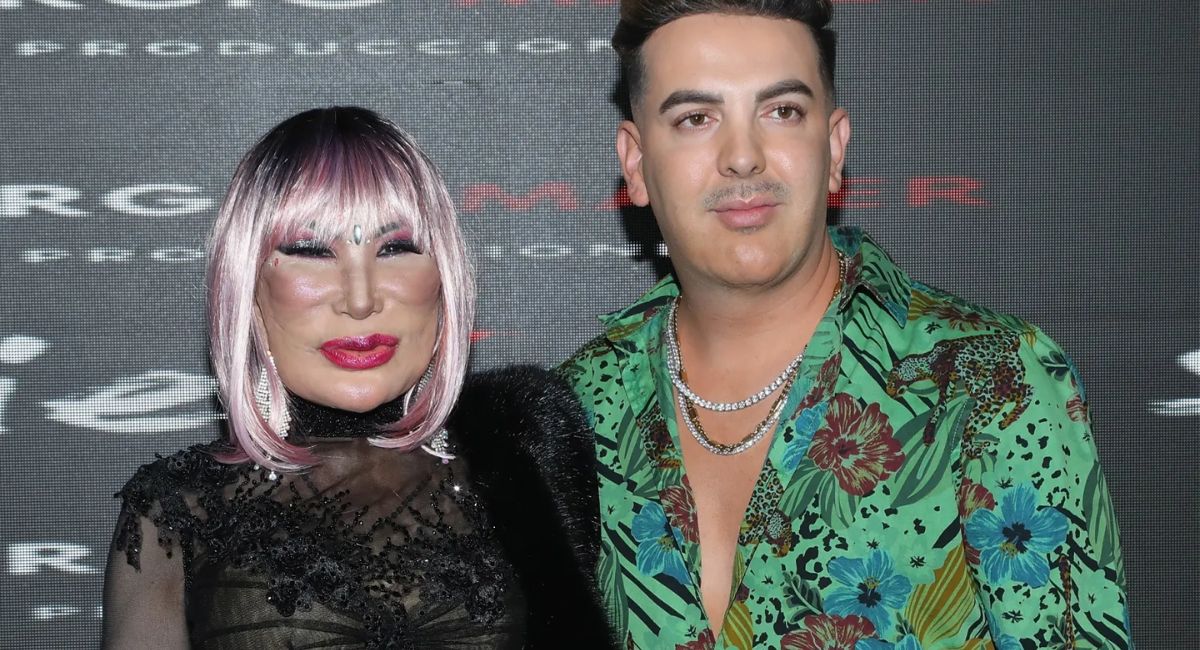
Introduction Who is Antonio Chi Su?
So why is Antonio Chi Su, a businessman who mostly shunned the public eye, suddenly back in the spotlight online decades after his death?
The answer is partly his marriage to Mexican actress and vedette Lyn May, but his story is also laced with entrepreneurship, Chinese-Mexican identity, private devotion, serious illness, and an extraordinary story of loss that continues to capture media attention.
Antonio Chi Su (also reported as Antonio Chi-Xuo, Antonio Chi Xuo, or just Antonio Chi) was a restaurateur and businessman associated with Chinese restaurants in Mexico City. He was a prolific actor, although he is best known as the husband of Lyn May, one of the most recognisable faces of Mexico’s cabaret and “cine de ficheras” era.
Antonio did not forge a public career via films, television, music, or interviews, unlike his famous wife. Most of what is known about him comes from the memories of Lyn May and subsequent entertainment reporting. That makes his biography interesting, but also difficult to document with complete accuracy.
This article separates the well-known facts from the assumptions, contradictions and sensational claims that are often found in online biographies.
Quick Facts About Antonio Chi Su
| Detail | Best Supported Information |
| Full Name | Antonio Chi Su (also spelled Antonio Chi-Xuo) |
| Nationality or Ethnic Origin | Described as a businessman of Chinese or Chinese-Mexican background |
| Occupation | Restaurateur, businessman |
| Known For | Married to Mexican actress Lyn May |
| Business Association | Associated with the Chinese Restaurants Association in Mexico City, several reports mention the restaurant business Siete Mares |
| Relationship Time Frame | They met in the 1980s; the date of their marriage is reported differently across sources |
| Medical Condition | Diagnosed with prostate cancer |
| Year of Death | 2008 |
| Public Profile | Maintained a much more private public profile than Lyn May |
Claims about Antonio’s place of birth, date of birth, education, exact wealth and early family life should be taken with a grain of salt as there is no readily available birth certificate, formal obituary, corporate profile or detailed interview.
3. Antonio Chi Su: His Background and Cultural Context
A non-entertainment industry businessman
To the public, Antonio Chi Su was more of a businessman than a celebrity. Mexican entertainment reports describe him as a restaurant entrepreneur who owned or operated restaurants that were linked to Chinese food. Some sources say he owned the Siete Mares restaurant chain; others point to a Chinese restaurant on Avenida Bucareli in Mexico City.
These descriptions might be different aspects of the same business operation. But public reporting does not provide the corporate documentation to determine the exact number of restaurants, the ownership structure or how long each site was operated.
That difference matters. Modern biography pages often take a simple, supportable fact, “He worked in the restaurant business”, and make much larger claims about international success, cultural leadership or a major culinary empire. While those expanded descriptions sound great, they’re not always supported by established sources.
Avenida Bucareli’s significance
Avenida Bucareli is a historic street in central Mexico City, located near areas historically linked to immigration, commerce, journalism, restaurants, and urban cultural exchange. Antonio and Lyn May’s story takes place in Mexico City because of reports linking them to a restaurant there: entertainment people, local diner culture, immigrant business practices, and commercial life all coming together in one neighbourhood.
Antonio met Lyn May in 1980 and later opened a restaurant with her in Mexico City, Milenio reported. The same report also reports on their marriage in 1988.
Some reports say they started their relationship or got married in 1989. The chronology we have is not consistent, so the safest conclusion is that they met in the 1980s and formalised their relationship toward the end of that decade.
How Antonio Chi Su Met Lyn May
Lyn May was already a famous entertainer when she met Antonio. She was a cabaret performer, television star, dancer and actress in Mexican films in the 1970s and 1980s. Antonio, however, was a more private and commercially driven world.
One of the more often repeated stories is that Lyn met him while shooting a scene near one of his restaurants. Rumour has it that the cast ate at the establishment, giving the two a chance to get to know each other.
Here are all the ingredients for a classic entertainment romance: a glamorous performer on location visits a local restaurant and meets the businessman who will become one of the most important people in her life.
Still, the exact year is a matter of dispute. Some reports say they met in 1980 and married in 1988. Infobae reports that Lyn met Antonio in 1989, and multiple reports have quoted her as saying the two were together or married for around 25 years.
These statements don’t fit well if Antonio died in 2008. One possible explanation is that Lyn was talking about their overall emotional relationship in general rather than outlining a legal marriage timeline. Or perhaps dates were simplified during the television interviews.
Their Marriage and Business Partnership
A public-private relationship
Antonio and Lyn May seemed to be on opposite poles of public life.
Lyn’s job needed visibility. She entertained, appeared on camera, made headlines and entered the popular culture of Mexico. Antonio was seldom interviewed and seems to have enjoyed living life away from the glare of the entertainment spotlight.
This difference may have been good for their relationship. Public figures often require a partner who isn’t vying for the same attention. An “everyman” spouse can provide stability, routine and a buffer from the demands of stardom.
Lyn has often spoken fondly of Antonio, describing him as a loving, giving and supportive husband. She thought he was the only man she married through the church and civil law, Univision reported.
The restaurant. A joint effort
There are several reports that the couple ran or owned a restaurant together. Reports also say Lyn inherited businesses or interests in restaurants when Antonio died.
A common enterprise can strengthen a marriage, but it can also be a pressure. Couples need to agree on money, staff, suppliers, hours, reputation and ownership. Antonio and Lyn’s partnership may have worked in part because each person had something different to bring to the table:
- Apparently Antonio brought operational and restaurant experience.
- Lyn had connections in the entertainment world and public recognition from it.
- The double view might have tempted customers.
- “It gave Lyn an economic function beyond performing.
There isn’t enough solid documentation to know how well the restaurant did financially. So, don’t make any definitive statements about how much Antonio is actually worth.
Antonio Chi Su’s sickness and death
Several reports said Antonio was diagnosed with prostate cancer in 2004. He lived with the illness for a few years before he died in 2008. Some say January 2008.
“Prostate cancer can be very different in one man compared to another. Some forms are slow-growing, but aggressive forms can spread and become life-threatening. Public sources do not contain reliable medical records regarding Antonio’s stage, treatment plan, hospital care, and precise clinical course.
Thus, it is irresponsible to speculate if earlier detection, a specific treatment, or a different medical decision could have altered his outcome.
All that can be said is that Lyn has described looking after him in the last stages of his illness. Her accounts suggest that his declining health had a deep effect on her and that his death precipitated a profound emotional crisis.
The story of grief that revived the public
Lyn May’s story of exhuming her husband
The most widely circulated part of Antonio Chi Su’s story – and the most troubling – involves Lyn May’s comments on what happened after his death.
In television and podcast interviews, Lyn said she was unable to accept the loss and had Antonio’s remains removed after burial. She said she stayed close to or slept beside his body until relatives persuaded her to let him go. Variations of this account have been floating around Mexican and international Spanish-language media since at least 2021, with a fresh round of coverage following interviews in 2025.
This story has to be carefully contextualised.
It is primarily based on a personal testimony of Lyn May. Most of the reports are repetitions of her statements, without reference to cemetery documents, court records or independent witnesses. So it should be described as something that she says happened, and not as an event that is fully documented, with every detail established independently.
The story through the grief not showmanship
The account is often packaged by online headlines as horror, scandal or celebrity shock. That approach gets clicks but strips out the emotional context.
Lyn described her actions as a response to unbearable grief. She had been with Antonio for years, had seen him suffer with cancer, and now faced a permanent separation she was not psychologically ready to cope with.
Extreme grief may involve disbelief, disorientation, fixation, guilt, sleep disruption and difficulty accepting the death of a loved one. That doesn’t mean every action is healthy or lawful, but it does make for a more human discussion of the episode.
The point is not that Lyn’s response was romantic, or that it should be imitated. That is, grief can become so intense that it needs immediate family support and professional mental-health care.
Why Are They Looking For Antonio Chi Su In 2026?
Antonio died in 2008, but his name is cropping up in a new wave of articles in 2025 and 2026.
There are a number of reasons for the renewed interest.
1. Lyn May then talks about her past
New interviews have brought Antonio’s story to a younger audience who may not remember Lyn’s earlier career. In 2025, coverage returned to her marriage, his illness and her grief at his death.
2. Podcast clips go worldwide
A long interview can be segmented into dozens of short clips to be used on TikTok, Facebook, Instagram, YouTube Shorts and entertainment websites. So a dramatic statement that was heard on Mexican television years ago can now be heard by audiences in several countries.
3. Bio-content rewarded by search engines
When people encounter an unfamiliar name in a viral clip, they search questions such as:
- Who was Antonio Chi Su?
- Was Antonio Chi Su Lyn May’s husband?
- What happened to Antonio Chi Su?
- What was Antonio Chi Su’s cause of death?
- Did Antonio Chi Su own a restaurant?
Publishers then create articles around those searches. Unfortunately, one thin article may copy another, causing unsupported details to spread quickly.
4. His name is given differently.
The different spellings of Chi Su, Chi-Xuo, Chi Xuo, and Antonio Chi can make it seem like the subject is several different people. Writers may be merging information without realising the spelling conventions have changed across Spanish and English language reports.
What Do We Know For Certain—and What Do We Not Know?
Well-founded information
The best reporting we have leads us to the following conclusions:
- Antonio Chi Su was a restaurant owner and businessman
- He was involved in the running of Chinese restaurants in Mexico City.
- He was the long-time husband or partner of Lyn May.
- Their relationship began in the 1980s.
- Prostate cancer was found.
- He passed away in 2008.
- Lyn has often said that his death was one of the most painful experiences of her life.
Misleading information
The following details are not to be put forth as proved, without stronger records:
- His precise date and place of birth
- The names of his parents
- Early life and education
- The exact legal date of his marriage
- What his net worth actually is
- the value and number of his restaurants combined
- Claims that he was a cultural ambassador, artist or festival organiser
- Specific medical details beyond the reported cancer diagnosis
- Lyn’s description of what happened after the burial is very detailed
The best biography isn’t the one that gives you the most information. It is the one that cleanly separates evidence, testimony, inference and speculation.
Practical Guide: How to Research Ethically Antonio Chi Su
try alternate spellings
Use different forms of the name:
- Antonio Chi Su
- Antonino Chi-Xu
- Antonio Chi Xuo
- May Antonio Chi Lyn
- Antonio Chi Restaurant Siete Mares
Different spellings yield different reports.
Focus on interviews and well-known publications
Lyn is a real person, not a biography page copied from some other website. Established outlets such as Milenio, El Universal, Infobae and Univision provide useful context, but their entertainment stories can still be inconsistent.
Compare dates; don’t just choose the date that is most convenient
If one report says 1988 and another says 1989, note the conflict. Don’t pick a date just because it makes the timeline look cleaner
Do not repeat unsupported estimates of wealth
There is no public data available to ascertain the net worth of Antonio Chi Su. Owning a restaurant alone does not prove a particular fortune.
Treat sensational testimony with caution
Use phrases such as:
- “Lyn May said…
- According to her story…
- “There have been reports of the claim but no independent verification…”
This language shields accuracy without accusing the speaker of being dishonest.
Typical errors in Antonio Chi’s biographies
Error 1: Making Up a Whole Childhood
There are few credible public records, but some biography pages describe Antonio’s upbringing, personality, values, education, and early ambitions.
State that little verified information is known about his early life explicitly.
Error 2: Turning inference into fact
One could say that Antonio was a Chinese restaurant owner and therefore had to have invented fusion, organised cultural festivals, or been a community ambassador.
Solution: Differentiate between reasonable possibilities and documented actions.
Mistake #3: Confusing years married with years together
The 25-year marriage claim contradicts reports that they married in the late 1980s and Antonio died in 2008.
Solution: Describe it as a long-term relationship and note the variance in reported dates.
Mistake 4: Defining him by the exhumation story alone
While the grief account takes up most of the headlines, Antonio was also a working businessman, partner, stepfather figure and restaurant owner.
Set the sensational story in the wider context of his life and marriage.
Mistake 5: Lyn May’s diagnosis from a distance
Online writers don’t have sufficient evidence to make a psychiatric diagnosis from eccentric behaviour.
Solution: Speak about severe grief in general terms, not as a specific clinical disorder.
Pros and Cons of the Public Narrative
Benefits of the stories accessible
The core facts are reiterated by several outlets. Antonio’s job, relationship with Lyn, cancer diagnosis, and death in 2008 are pretty consistent. Lyn’s repeated recollections themselves provide emotional insight that official documents could not.
Limitations
Most of the coverage is about Lyn May rather than Antonio himself. He didn’t leave behind many interviews that were easily accessible, and the public narrative was mainly built after he died. Antonio is mostly seen through the memories of his widow and the entertainment journalism.
This leads to an imbalance. We know what Lyn said she felt about him but far less about how Antonio described his own life, identity, marriage or ambitions.
The most just biography must honour that silence, not fill it with imaginary detail.
Antonio Chi Su’s Story: More than Meets the Eye
Antonio’s life is an example of how a private person can enter public history through his connection to someone famous.
His legacy is not in film credits, not in public speeches. Lyn May still remembers him with the same passion, and he’s still in the restaurant business – a long relationship.
Three broader lessons are suggested.
Quiet influence can be as powerful as celebrity
Often invisible to the audience are the people who stabilise a public figure’s life. Their impact seems indirect, in terms of emotional security, business decisions, family continuity, or the ability to deal with an unpredictable career.
Small businesses help preserve cultural connections
Restaurants are more than just places that sell food. They can link immigrant traditions with local tastes, create jobs, support families and become meeting places for different communities.
The legacy is shaped in part by survivors.
Antonio had no say in how his story would be told after he was dead. Lyn was its primary narrator. This reminds us that biography is not merely a list of events but a construct of memory, grief, media framing and repetition.
What His Online Legacy Might Be The Future Outlook
Interest in Antonio Chi Su will no doubt continue as older television interviews are digitised and redistributed.
AI summaries and automated biography sites might make basic info more available, but they also pose a serious threat: uncertain claims can be copied enough times that they start to seem verified.
Future coverage may improve if researchers can locate:
- Restaurant advertisements from the past
- Business registrations records
- Marriage certificates
- Newspaper profiles from the past
- Interviews with ex-employees or relatives
- Photographs with dates and captions that are reliable
The responsible course is to keep a limited but credible biography until such sources are forthcoming, rather than to build a dramatic life story out of guesswork.
Conclusion: Remembering Antonio Chi Su Beyond the Headlines
Antonio Chi Su was not an ordinary celebrity. Though a private businessman, his name became forever linked to one of Mexico’s most colourful entertainment figures.
His most extensive record is as a restaurateur and long-time partner of Lyn May, whose death from prostate cancer in 2008 left her heartbroken. The more bizarre parts of the story come primarily from Lyn’s own interviews and should be attributed to her, rather than accepted as proven in every detail independently.
His biography is also a lesson in Internet research. If the historical record is scanty, it is no fault to be honestly uncertain. It is a mark of responsible writing.
Quick Summary & Key Takeaways
- Antonio Chi Su, also known as Antonio Chi-Xuo, was a businessman with connections to a number of Chinese restaurants in Mexico City.
- He became known to the public because of his long relationship and marriage to the Mexican vedette Lyn May.
- They met and married at some point in the 1980s, with dates varying.
- According to several sources, he is linked with the Siete Mares restaurant enterprise and a restaurant on the Avenida Bucareli.
- He was diagnosed, it was said, with prostate cancer in 2004 and died in 2008.
- Lyn May has said that she was overcome with grief and decided to exhume his body after burial, but the story is largely based on her word.
- His claims about his birth, education, net worth and wider cultural activities are still poorly documented.
- Viral interviews, celebrity nostalgia and a renewed appetite for biography content are helping to propel his renewed online visibility.
- The most accurate account is to distinguish the well-established facts from media repetition and speculation.